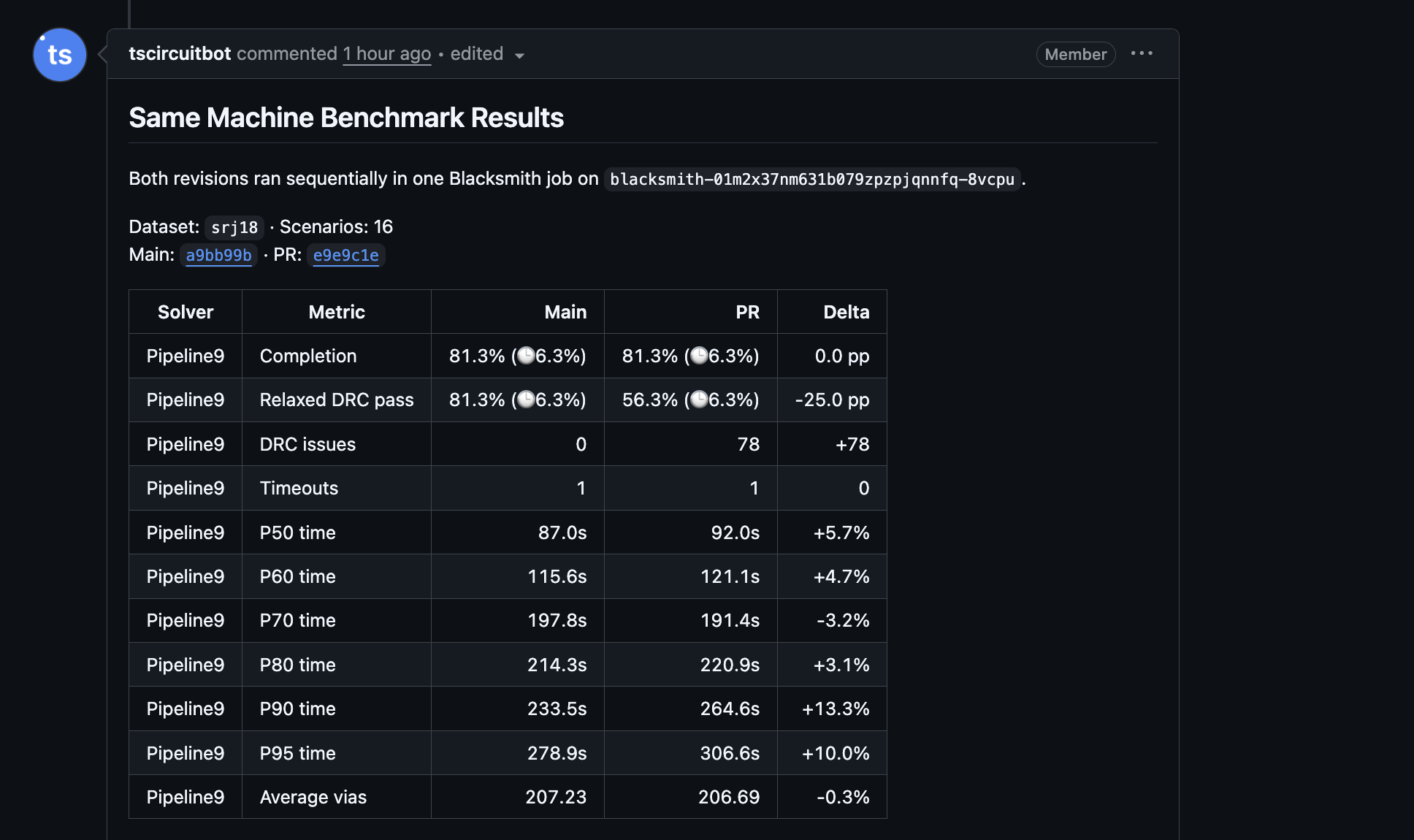
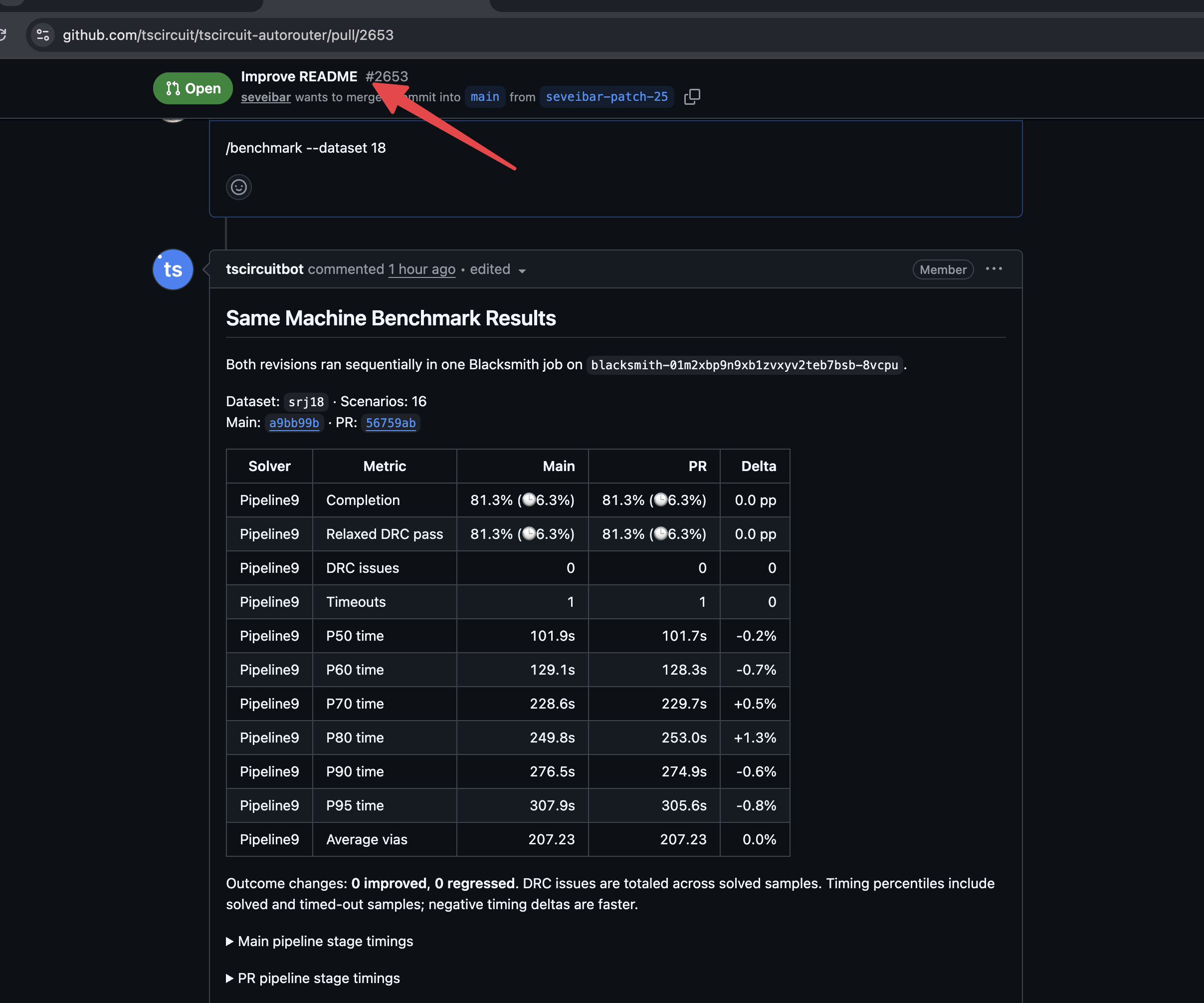
got this repro can you take a look too https://github.com/tscircuit/tscircuit-autorouter/pull/2606
Seve
You need to fix drc evaluation to understand whether buried is allowed
Seve
Dont rewrite routes
Seve
In the drc eval, if buried isnt allowed, every via is through hole
Seve
I get what is going on with a dual representation issue, because from/to on the via represents the path traveled NOT the via extent, i get that this representation is a bit flawed
Seve
We will eventually need to reconcile that, which is going to be annoying, we will have to say drill_start_layer and drill_end_layer or something
Abse
<@757706909351411845> for this pr do you mean the model is not right ?
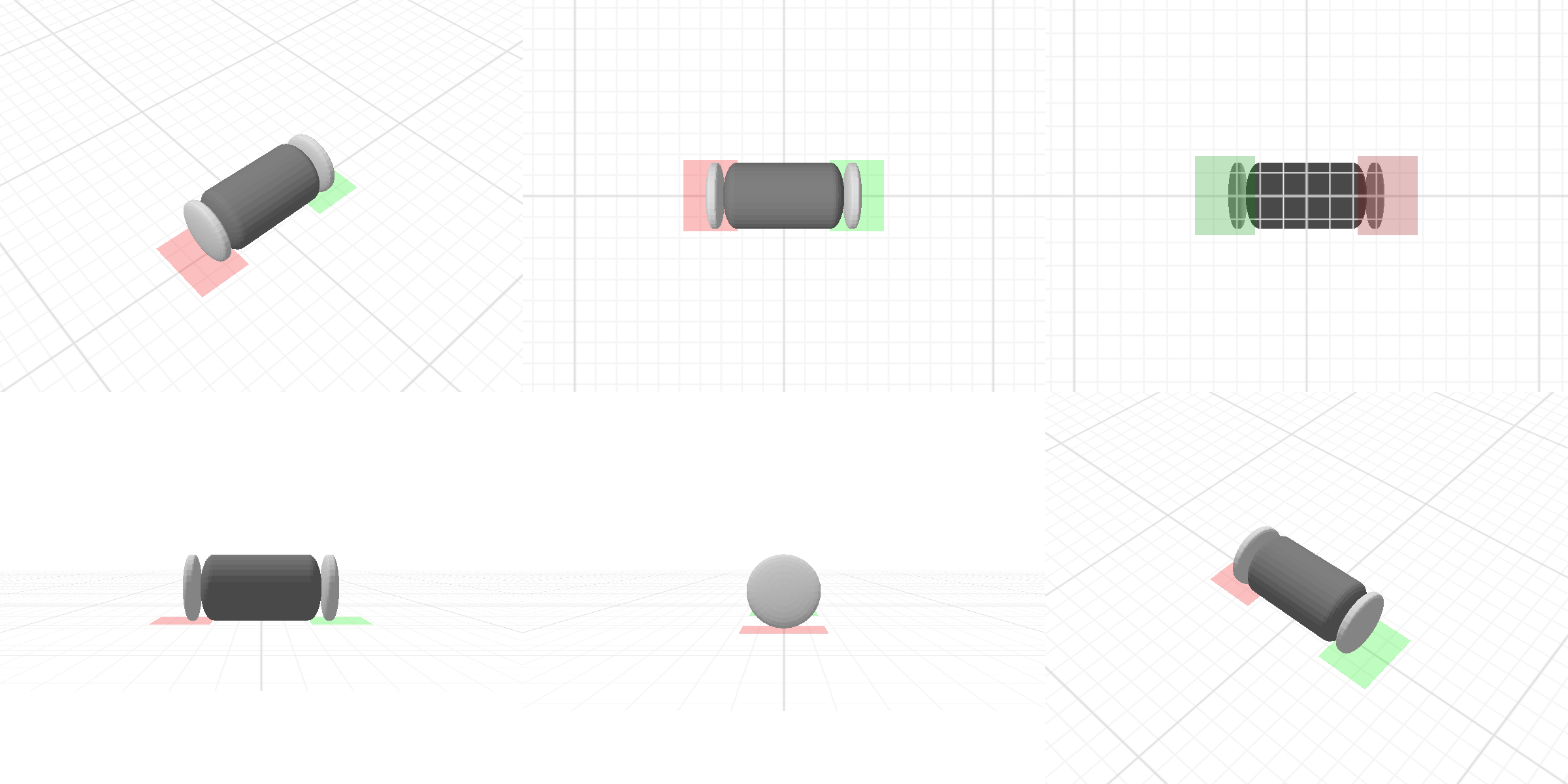
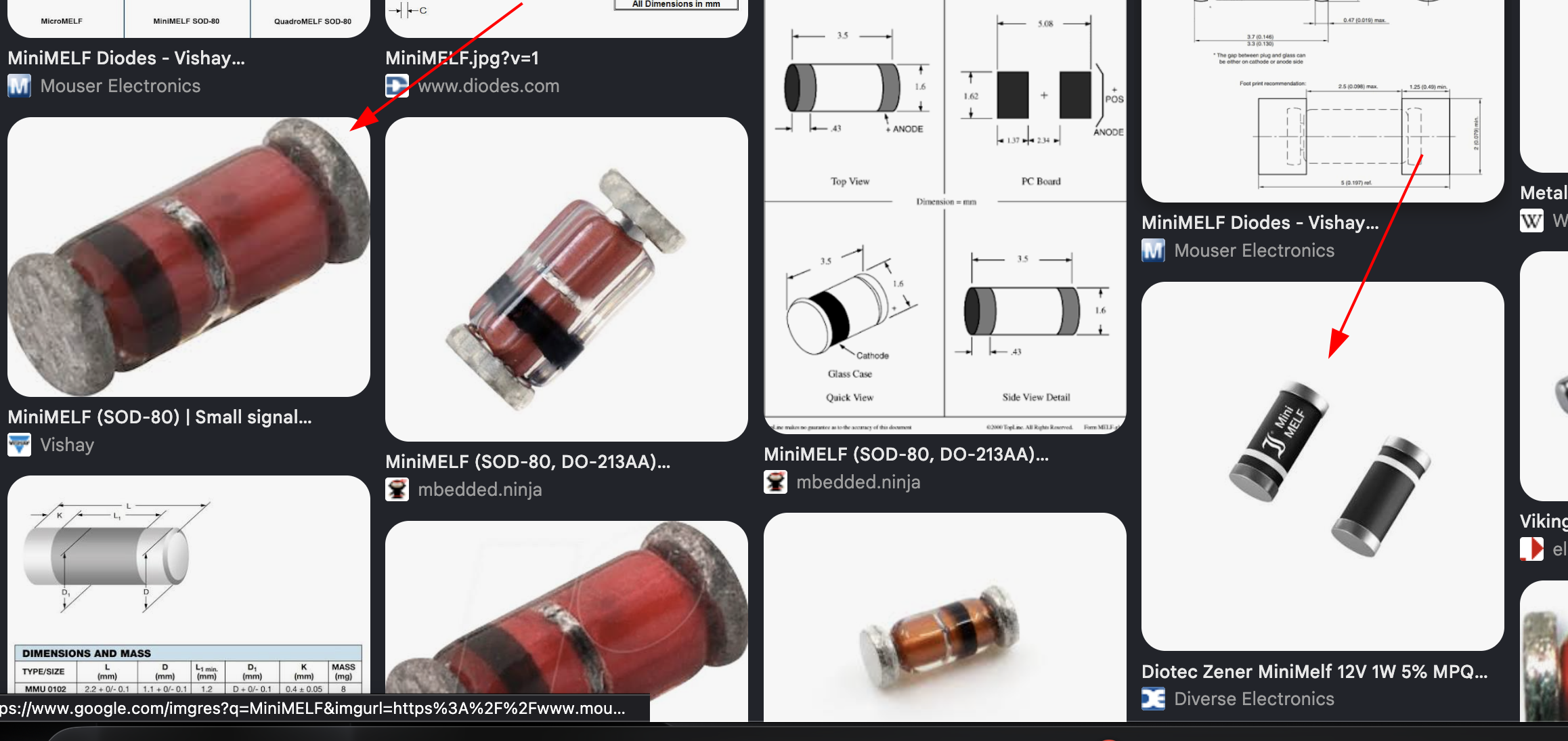
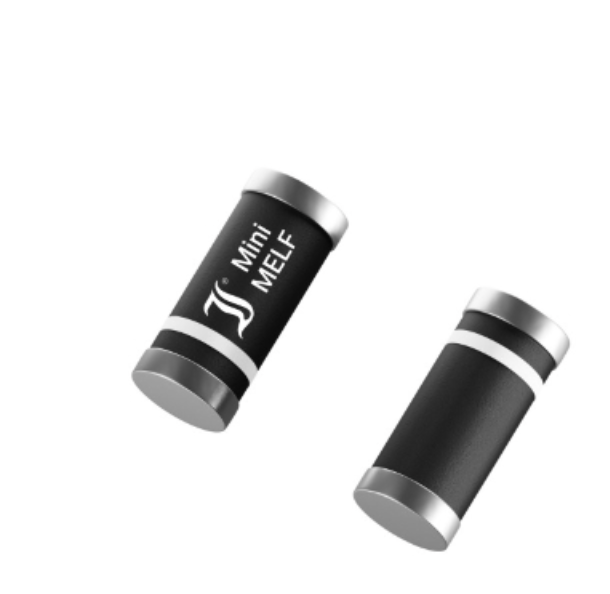
I have seen that there is two shapes so we don't want the mushroom like pins right ?
<@757706909351411845> The router treats a trace’s minimum width as a preference. It can choose a path using the smaller board minimum, then narrow the trace to fit. That’s how a requested 1.0 mm trace became 0.15 mm in issue [#1721](https://github.com/tscircuit/tscircuit-autorouter/issues/1721). PR [#2606 ](https://github.com/tscircuit/tscircuit-autorouter/pull/2606)shows that a wider detour can exist.
The router should first look for a path using the larger of the board and trace minimums. If it can’t find one, it should keep routing but show a warning with the trace, requested width, and actual width. Tests should cover both the wider detour and the narrowed route with a warning.
Seve
right, so my recommendation here is to have a solver after the portPointPathingSolver that attempts to reroute traces that meet the minTraceWidth AND/OR add cost to ports that can't support adjacent traces
Seve
this is a tricky issue because adding the costs could have a performance penalty. Also large traces can sometimes be broken into smaller traces to achieve a higher effective trace width (this is uncommon!).
So my recommendation is to add the additional stage that operates on a hypergraph to improve trace widths because it ensures we don't reduce completeability. Adding the cost etc. could impact completeability, but adding a new stage shouldn't have an impact
Seve
it is also prevents optimizing hypergraph solving for different objectives- that would suck. We can just optimize for improve trace widths if it's a separate stage
<@757706909351411845> https://github.com/tscircuit/high-density-repair03/pull/136 should have no regression on the autorouter benchmark ( we have a 78 drc now on srj18)
PS the drc was 37 before resolving the conflict so must have been some other pr with drc regression
the repair03 was integrated on https://github.com/tscircuit/tscircuit-autorouter/pull/2609
<@757706909351411845> We have now integrated Repair03 into the autorouter. The additional DRCs are real existing routing issues exposed by the corrected DRC detection, rather than regressions caused by Repair03. Repair03 fixes one affected route: SRJ18 sample 10 now passes DRC, improving the SRJ18 DRC pass rate from 56.3% to 62.5%.
Seve
Fixes have to be introduced separately from the drc change
Seve
To maintain sanity
Seve
Ie we should never change drc eval in the same pr as fixes
<@757706909351411845> this was merged by the ai can you review if its ok or need a revert
https://github.com/tscircuit/high-density-repair03/pull/143
Abse
it was benchmarked on this pr https://github.com/tscircuit/tscircuit-autorouter/pull/2666 with no regression on dataset 01 and 2 drc improvments on srj18
Want to add to the conversation?
Reply in Discord so your notes stay connected to the source.